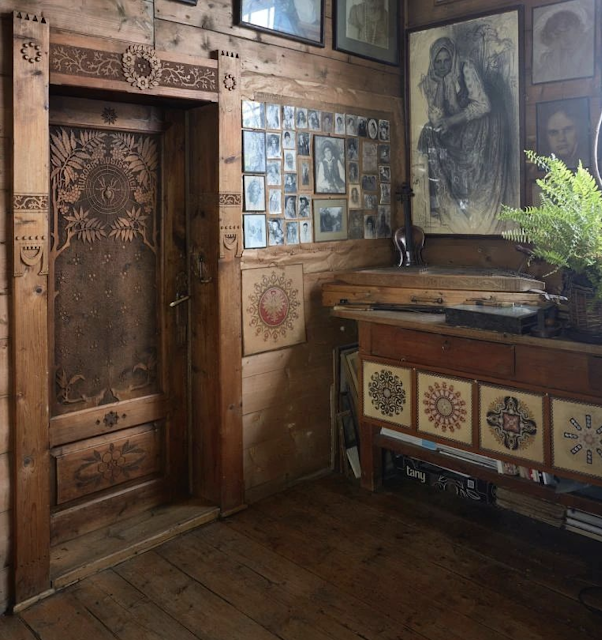
A corner of Kłosowski’s studio with a display of artwork and paper cuttings, Silent Villa. Private collection, by descent from the artist. Photo courtesy of the National Museum, Krakow.

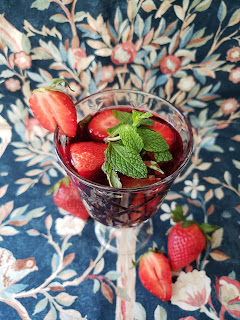
1. STrAWBERRY BOURBON SMASH
3 medium strawberries
1-2 tsp (4-8 g) sugar
6 fresh mint leaves, torn, plus more for garnish
1.5 oz (43 ml) Bourbon*
*Replace with pomegranate juice for a mocktail*
1/2 oz Grenadine
1 tbsp (15 ml) fresh lemon juice
1/4 tsp dark balsamic (or 2 dashes of Angostura bitters)
Ice
In a rocks glass muddle the strawberries and sugar together, fill the glass with ice (or use whole frozen strawberries).
In a large cocktail shaker, add the torn mint leaves, bourbon, grenadine, lemon juice and balsamic. Fill the shaker with ice. Shake well and strain into the glass. Garnish with fresh mint sprigs. Enjoy!
***
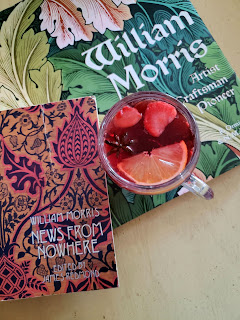
2. STrAWBERRY Holiday Mulled Wine


We’ll walk down memory lane to look at the early days of the WMSC, and the great WMSC trips over the years. We will also have some small group breakout rooms for chats, which people enjoyed last year.
You’re encouraged to wear your Morris/Liberty finery, or whatever else makes you feel special.
As it’s a cocktail hour, we ask you “what would Morris drink”? If people have some ideas for creative cocktails, please email us beforehand and we'll share them with the group. We’ve already had the suggestion of “Strawberry Thief”, recipe still to be determined.
We’ll have a toast, so be prepared with something you’d like to sip on, whether it’s a cocktail, glass of wine or cuppa tea.

In the 1860s William Morris and the London-based Icelander Eiríkur Magnússon began translating Icelandic sagas into English. They soon published the first ever translation of Völsunga saga, as The Story of the Volsungs and Niblungs, with Certain Songs from the Elder Edda, in 1870. This archetypal Norse dragon-slayer dragon-slayer legend inspired a range of later poems, prose tales, and articles by William Morris and by his successor in Norse-inspired medievalism, J. R. R. Tolkien. Both medievalists immersed themselves deeply in the Norse legacy of Eddas and Sagas, and in response cultivated a Romantic philosophy of craftsmanship. In their various versions of the Volsung legend two figures stood in stark contrast in the roles of creator and destroyer: the Dragon and the Smith.


Young Poland: The Polish Arts and Crafts Movement
An illustrated lecture by Julia Griffin

The Young Poland movement emerged in the 1890s in response to Poland’s non-existence for almost a century. From the end of the 18th-century Poland underwent successive partitions dividing the country between Russia, Austria and Prussia, resulting in the country disappearing from the map of Europe for 123 years. In the words of historian Norman Davies, Poland became “just an idea – a memory from the past or a hope for the future”. With the failure of military uprisings, culture became a means to preserve an endangered national identity.
The movement originated under the more liberal Austrian partition known as Galicia, namely in Kraków and the nearby village of Zakopane at the foot of the Tatra Mountains, and soon spread across the nation. It embraced an unprecedented flourishing of applied arts and the revival of crafts, drawing inspiration from nature, history, peasant traditions and craftsmanship to convey patriotic values. While the diverse visual language of Young Poland was created autonomously, in search of a distinctive cultural style and identity, it simultaneously looked outwards to Britain and the rest of Europe.
The first part of the October 3rd lecture will chart the artistic achievements of Stanislaw Wyspianski (1869–1907), arguably the greatest design reformer in Poland’s history, who was William Morris’s closest counterpart. The two artists came from different generations and never met. However, they had a lot in common in terms of their reformist outlook, remarkable creative versatility as applied arts designers and interior decorators, shared interests, commitment to similar causes, and last but not least their character traits and work ethic. As J.W. Mackail, the author of Morris’s first official biography The Life (1899), perceptively stated, Morris’s two greatest inspirations were history and nature; the same was true for Wyspianski. In fact, Wyspianski’s ‘intention was to play the same role in Poland as Morris did in England.’

